Elite Roof Replacement — Spring, TX
Commercial Roof Replacement Spring, TX
Our commercial roof replacement Spring, TX crews renew worn roofing on offices, retail buildings, warehouses, and churches. We install flat and low-slope systems designed for large square footage, rooftop equipment, and foot traffic. Projects are phased and scheduled to keep your business running with minimal disruption.
- Roof inspection
- Local Spring, TX team
- Full tear-off & replacement
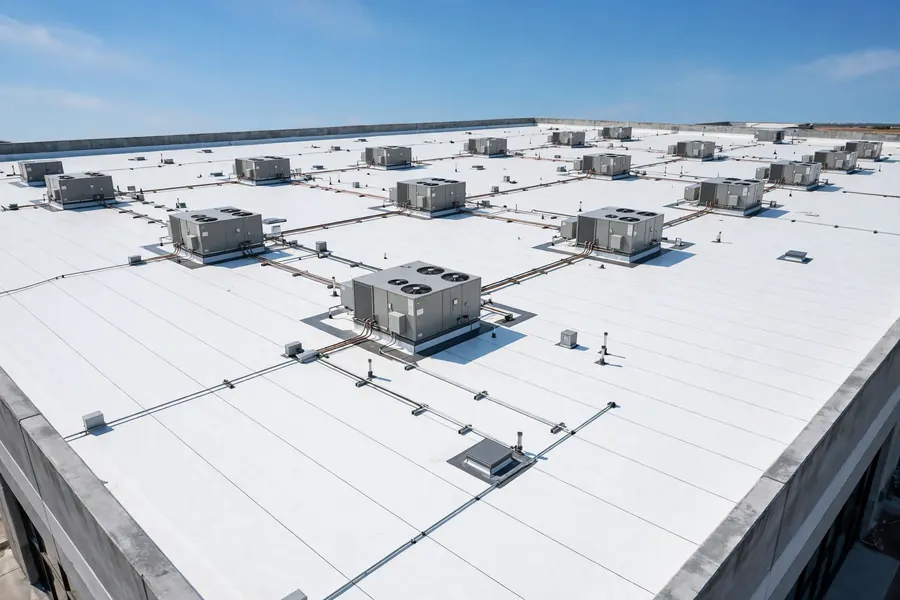
What’s included in commercial roof replacement
A commercial roof is a building system, not just a surface. Here is what our replacement projects include from survey to sign-off.
Roof survey and core samples
We walk the full roof, take core cuts to check layers and moisture, and map every problem area before quoting.
Tear-off or recover evaluation
If the deck is dry and there is only one sound layer, a recover can save serious money. We recommend based on evidence, not habit.
New membrane system
TPO, EPDM, or modified bitumen installed to spec, with insulation upgrades where they pay back in energy savings.
Flashing at equipment and edges
New flashing at HVAC curbs, pipes, parapets, and edges, with wind-uplift detailing where storms hit hardest.
Drainage improvements
Ponding mapped and fixed with tapered insulation, new drains, or re-sloped sections so water leaves the roof fast.
Safety, schedule, and paperwork
Jobsite safety plans, a written schedule you can share with tenants, plus permits and manufacturer warranty registration.
Our commercial roof replacement process
Commercial projects live or die on planning. Here is the sequence we follow on every Spring building.
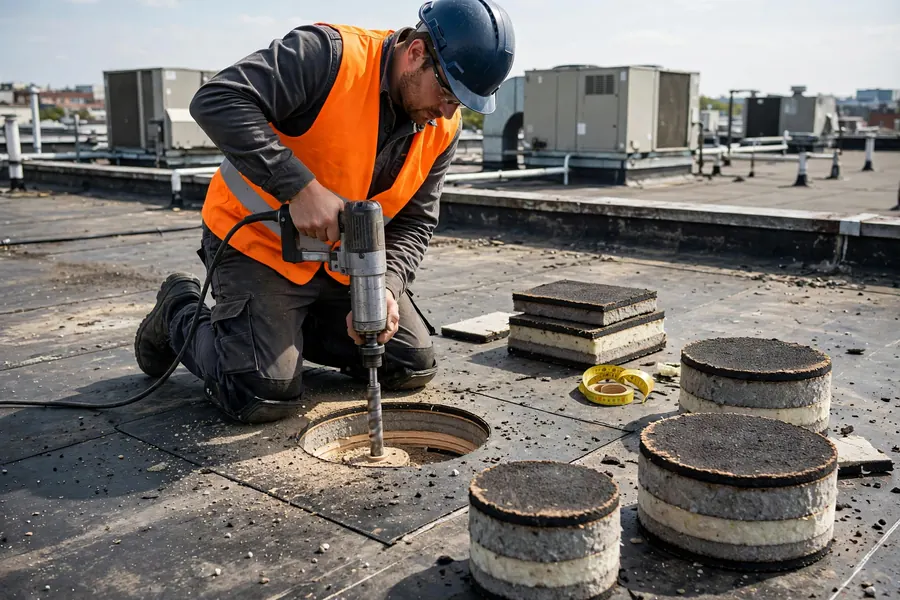
Site survey and core cuts
We measure, photograph, and core-sample the roof to understand layers, moisture, and deck condition.

Written proposal with phasing plan
You get a clear scope, a system recommendation, and a phasing plan that shows how we keep your building dry and open.
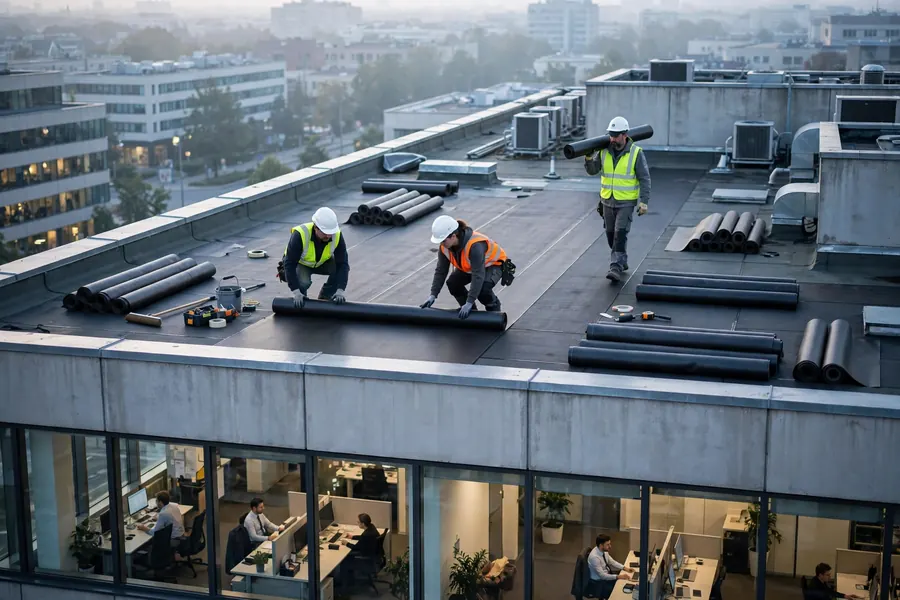
Schedule around your business
Noisy and disruptive tasks are timed around your hours, tenants, and customers.
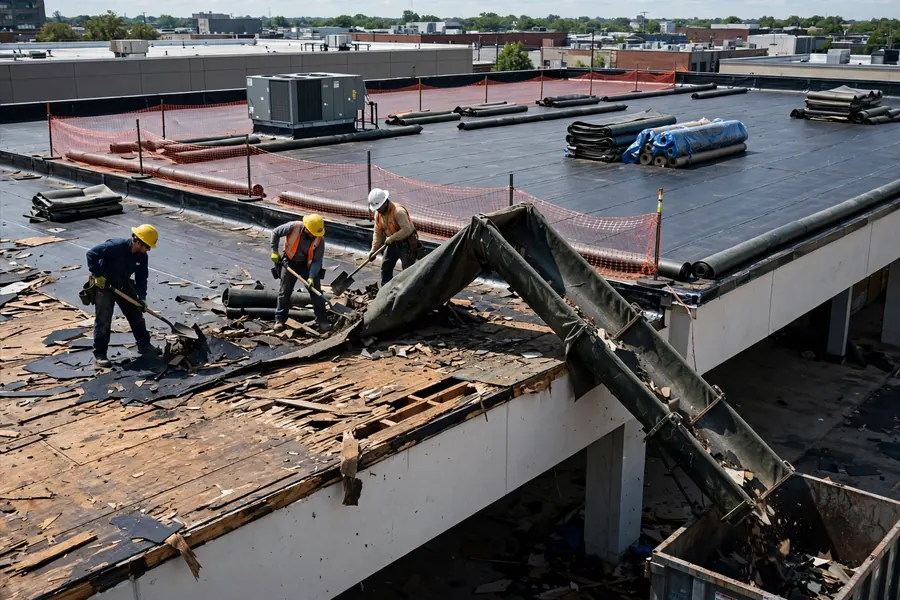
Section-by-section tear-off
We open only what we can make watertight the same day. Your building is never left exposed overnight.
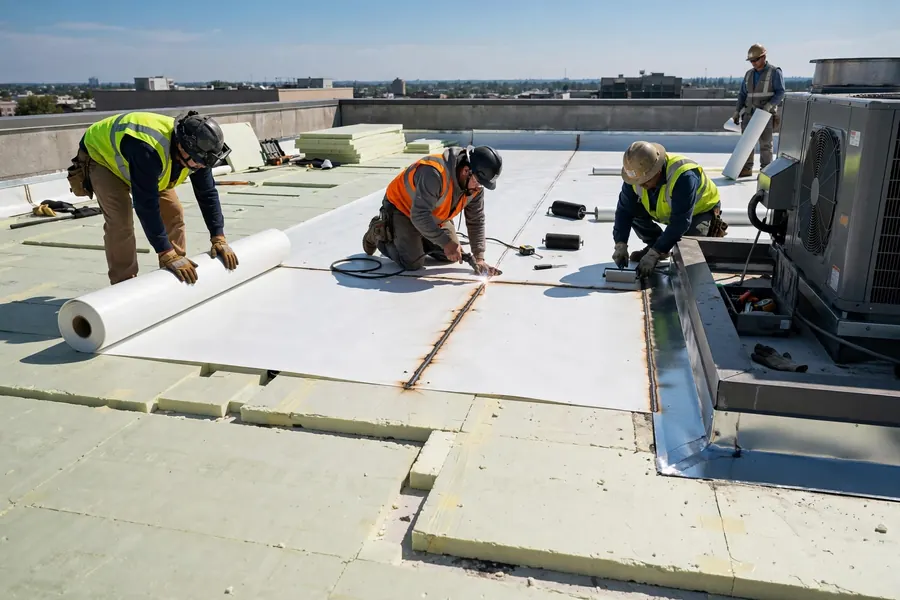
Membrane, insulation, and flashing
The new system goes down in sections: insulation, membrane, seams, and flashing at every curb and penetration.
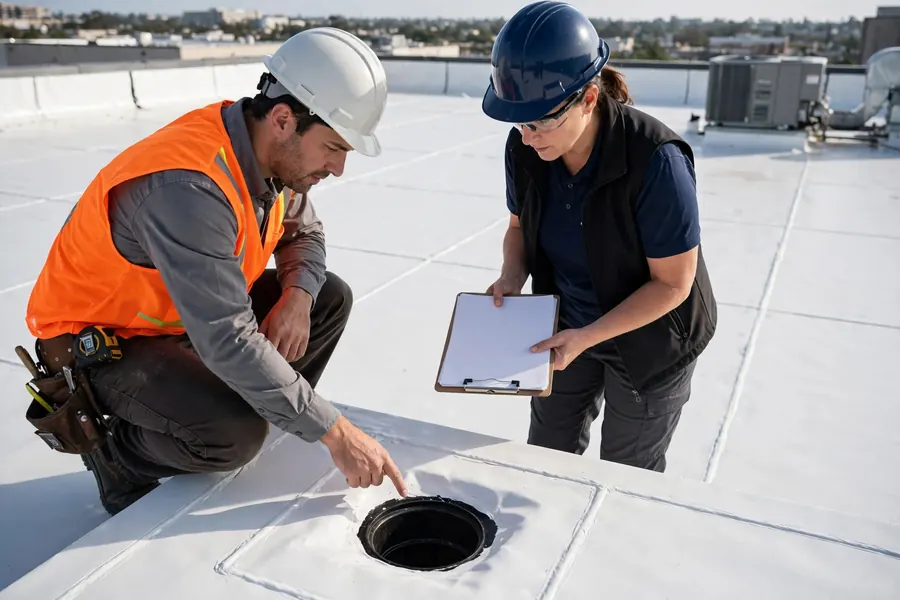
Final inspection and sign-off
Punch list, drainage verification, warranty registration, and a maintenance guide for your facilities team.
Cost of Commercial Roof Replacement Spring, TX
Commercial quotes scale with size and system. These are the factors behind your written number.
Square footage
Size is the primary driver. Large roofs benefit from economies of scale, but every square still needs material and labor.
System choice
TPO, EPDM, and modified bitumen sit at different price points with different strengths for traffic, reflectivity, and detailing.
Insulation goals
Adding insulation raises upfront cost and cuts energy bills. We show the trade-off plainly so you can decide.
Rooftop equipment
HVAC units, vents, skylights, and solar arrays each need custom flashing and careful sequencing around the equipment.
Tear-off vs. recover
Recovering over a sound single layer can cut cost significantly. Full tear-off costs more and resets the roof to a known-good deck.
Every building is different, so we survey before we quote. Call (832) 737-0179 for a commercial roof survey and a written proposal with phasing built in.
What's Included in Our Roof Inspection
Every commercial roof inspection from Elite Roof Replacement covers the same thorough checklist — on the roof, at the drains, and in writing.
- Membrane and surface: We walk the full roof checking the membrane for punctures, blisters, worn areas, and storm damage.
- Seams and flashing: Every seam, curb, and flashing detail gets a close look — most commercial leaks start at these joints.
- Drains and ponding: We check drains, scuppers, and low spots for ponding water and clogs that strain the system.
- Rooftop equipment: We inspect curbs and seals around HVAC units, vents, and skylights, and note anything that must move during the project.
- Interior check: Inside, we look for leak stains on ceilings and confirm drainage slopes actually move water off the roof.
- Photos of everything: You get clear photos of each problem area, so you see exactly what we see — no guesswork.
- Written findings: You receive a plain-language report with our honest recommendation: repair, restore, or replace — with budget planning in mind.
How Long Does Roof Replacement Take?
Most commercial replacements take one to three weeks, depending on roof size, system type, and how the work is phased around your operations. We schedule noisy or disruptive steps for off-hours when possible.
Your written proposal will include a clear timeline and phasing plan before work starts. Weather can still shift the schedule, and we keep you posted with daily updates.
Warranties and Financing, Explained
Two different warranties protect a new roof, and they come from different places. A manufacturer warranty covers defects in the roofing material itself and often lasts for decades. A workmanship warranty covers installation mistakes and comes from the roofing company — its length and terms vary widely from one roofer to the next.
In the roofing industry, financing usually works through third-party lenders that partner with contractors. Instead of paying the full project cost up front, you make monthly payments over a set term. Before you sign anything, compare the interest rate, the total amount you will repay, and any fees — and ask whether early payoff carries a penalty.
Whatever you decide, get everything in writing: the full scope of work, the materials being installed, the timeline, both warranty terms, and the payment schedule. Ask any roofer — including us — for a written proposal before work begins. Clear paperwork protects both sides.
Replacement vs. recover vs. coating
Replacement is not always the answer for a commercial roof. Here is how we help you choose honestly.
Full replacement
Best when insulation is wet, the deck is damaged, or layers are maxed out. It resets the roof to a known-good starting point with full warranty options.
Recover (overlay)
A smart save when the deck is dry and only one sound layer exists. Less tear-off, less downtime, lower cost — but only when conditions qualify.
Coating restoration
Can extend the life of a sound, aging membrane at the lowest cost. It cannot fix ponding, wet insulation, or failed seams, so we only recommend it when the base qualifies.
Built for Spring, TX weather
Spring's commercial roofs take the same punishment as homes, scaled up: summer heat that cooks dark membranes, cloudbursts that overwhelm bad drainage, and hurricane-season winds that attack edges and corners first.
We design for that reality with reflective membranes that cut cooling costs, tapered insulation that moves water off fast, and edge detailing built for Gulf wind events. Across Harris and Montgomery counties, we also handle the permit paperwork so your project stays compliant without slowing down.
- Heat: reflective TPO and light-colored membranes can meaningfully cut summer cooling load on large buildings.
- Storms: wind-uplift detailing at perimeters and corners, plus drains sized for Gulf Coast downpours.
- Hail: thicker membranes and protection courses shield high-traffic and hail-exposed areas.
- Compliance: we handle permits and paperwork across Harris and Montgomery counties as part of the project.
Commercial roof replacement FAQs
Can you replace our roof without closing our business?
Yes. We phase the work, keep entrances and operations clear, and schedule noisy tasks around your hours. Most clients stay fully open throughout.
Should we tear off or install over the existing roof?
If the deck is dry and there is only one sound layer, a recover can save real money. We take core samples and give you an evidence-based recommendation.
How long does a commercial replacement take?
Small buildings can take a few days; large facilities take a few weeks. You get a written schedule with phases before we start.
What about our rooftop HVAC units?
We work around them: curbs, flashing, and seals are rebuilt, and we coordinate with your HVAC contractor if any unit must be moved.
Do you handle permits and warranties?
Yes. Permits, manufacturer warranty registration, and a written summary of the work are part of every commercial project.
Does someone from our company need to be on-site during the project?
Yes, we ask you to name one point of contact who can approve decisions and give the crew access. You do not need to watch the work. We hold a short pre-job meeting, then send daily progress updates with photos until the final walkthrough.
How should we prepare our building before the project starts?
Move vehicles and equipment away from the building's edges, give tenants and staff the work schedule in advance, and secure anything inside that is sensitive to vibration or dust. We phase the work to keep entrances open and hold a pre-job meeting so your team knows what to expect.
What happens if it rains during my roof replacement?
We watch the forecast every morning and will not start a tear-off if storms are likely. If rain surprises us, the crew covers open sections with tarps and secures the site until it passes. Work resumes as soon as the roof is dry. We keep you updated if the schedule shifts.
How far in advance should I schedule my roof replacement?
For planned replacements, two to four weeks is typical, though we can often fit projects in sooner. After big storms, schedules fill fast, so call early. Once you approve the written proposal, we set your date and order materials. Call (832) 737-0179 to check current availability.
What is the difference between a manufacturer warranty and a workmanship warranty?
In the roofing industry, the manufacturer warranty covers defects in the roofing material itself, while the workmanship warranty covers installation errors and comes from the roofer. Manufacturer coverage often lasts decades; workmanship coverage varies by company. Ask any roofer — including us — to put both in writing before you sign.
Do I need a permit for a roof replacement in Spring, TX?
Most roof replacements in the Harris County and Montgomery County areas around Spring require a building permit, but rules vary by city limits, HOA, and whether you live in an unincorporated area. We handle permit paperwork for our projects. Always verify your local requirements before work begins.
Will a new commercial roof lower our energy bills?
It can. White or light-colored membranes reflect sunlight and cut cooling costs during Texas summers. New insulation installed during replacement helps too. Actual savings vary by building size, use, and system choice — during the inspection we review your current roof and give you realistic expectations.
Related roof replacement services
Flat Roof Replacement
Learn about flat roof replacement for Spring, TX homes and businesses.
Metal Roof Replacement
Learn about metal roof replacement for Spring, TX homes and businesses.
Emergency Roof Replacement
Learn about emergency roof replacement for Spring, TX homes and businesses.
Storm-Damaged Roof Replacement
Learn about storm-damaged roof replacement for Spring, TX homes and businesses.
Proudly serving Spring, TX neighborhoods
Cypresswood · Spring Trails · Louetta Lakes · Champion Forest · WindRose